Tracked Before You Spin: What Australian Online Casinos Really Know About Where You Are
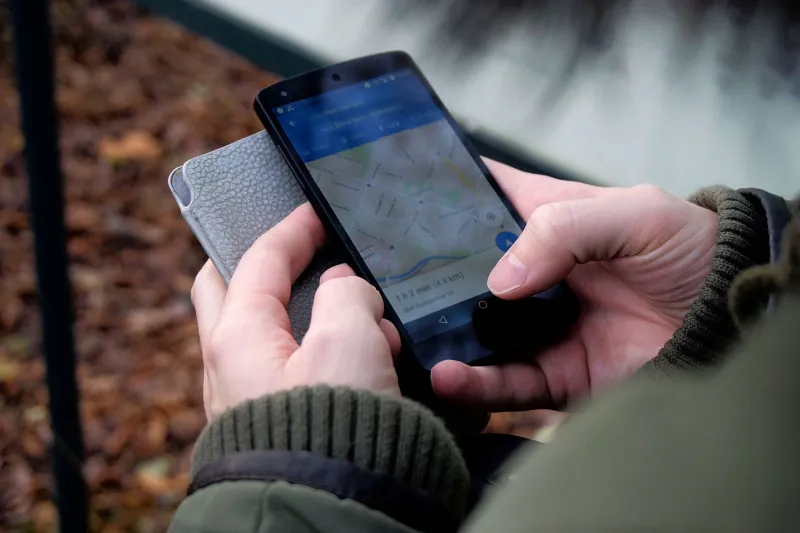
Most Australian players don't think twice about hitting the login button. You open the app, tap your details in, and you're ready to go. But before that first pokie reel even starts spinning, something else is already happening in the background — the casino is figuring out exactly where you are.
Geolocation technology has become a standard part of how online casinos operate, and for good reason. But the way it works, what data it collects, and what operators do with that information is something most players never get a straight answer on. Let's change that.
Why Casinos Care About Your Location in the First Place
It starts with compliance. Australia's gambling regulatory environment is genuinely complicated — different states and territories have different rules about what kinds of online gaming are permitted, who can offer them, and under what conditions. Casinos operating in the Australian market are required to verify that players are located in jurisdictions where their services are legal to access.
Beyond that, some game content is licensed for specific regions. A particular pokie title might be cleared for players in New South Wales but restricted elsewhere. Others might carry different RTP configurations depending on regulatory requirements in different markets. Geolocation is how casinos enforce all of this without manually checking every account.
In short: your postcode matters more to an online casino than most players realise.
How Geolocation Actually Works
There's no single method casinos use — most employ a layered approach that cross-references multiple data sources to build a confident picture of where you're logging in from.
IP address lookup is the most basic layer. Every device connected to the internet has an IP address, and these are mapped to geographic regions. It's not pinpoint accurate — IP-based location can sometimes place you in the wrong suburb, or even the wrong state — but it's a fast first filter.
GPS and device location data kicks in when you're playing on a mobile device and the app has location permissions enabled. This is significantly more precise, often accurate to within a few metres. If you've ever wondered why a casino app asks for your location, this is why.
Wi-Fi and cell tower triangulation adds another layer for mobile users, helping confirm location even when GPS signals are weak or unavailable.
Browser and account history also plays a role. If your account has always logged in from Melbourne and suddenly there's a connection from a European IP address, that inconsistency gets flagged.
All of these data points get processed — sometimes in real time — to verify that you're who you say you are and that you're where you're supposed to be.
What Data Is Actually Being Collected?
This is where a lot of players get uncomfortable, and honestly, fair enough. When a casino verifies your location, it's not just grabbing a suburb name and moving on. Depending on the platform and your device settings, the data collected can include:
- Your IP address and associated ISP information
- GPS coordinates (if location access is granted)
- Device identifiers
- Connection timestamps and session duration
- Historical login locations
How long this data is retained, who it's shared with, and how it's secured varies between operators. This is exactly why reading a casino's privacy policy — as dry as that sounds — actually matters. Reputable platforms will clearly outline their data handling practices. If that information is buried, vague, or missing entirely, that's a red flag worth taking seriously.
The VPN Question: What Happens If You Try to Mask Your Location?
Some players use VPNs for entirely legitimate reasons — privacy, security on public Wi-Fi, general data protection. But when it comes to online casinos, using a VPN to mask or spoof your location puts you in complicated territory.
Most casino terms and conditions explicitly prohibit using VPNs to circumvent geographic restrictions. If you're detected accessing the platform through a VPN — and modern fraud detection systems are getting very good at identifying VPN traffic — you risk having your account suspended, your session voided, or in worst-case scenarios, winnings withheld.
The argument from operators is straightforward: if a game or service isn't licensed for your actual location, they have a legal obligation not to provide it to you. A VPN doesn't change your actual location — it just obscures it. From a compliance standpoint, casinos treat that as an attempt to deceive.
For Australian players, the practical advice is simple: don't use a VPN while gambling online unless you've explicitly confirmed with the operator that it's permitted. The risk isn't worth it.
Can Geolocation Get It Wrong?
Yes, and more often than players might expect. IP-based geolocation in particular has known accuracy limitations. Rural and regional Australian players sometimes find their IP address resolves to a major city hundreds of kilometres away. Mobile users roaming between towers can trigger inconsistent location reads. Even home internet connections can occasionally be misidentified at the ISP level.
If you're legitimately located in a permitted area but getting blocked due to a geolocation error, most reputable casinos have a verification process to resolve it. Document the issue, contact support, and be prepared to provide identity verification. It's frustrating, but it's solvable.
What's more concerning is when players in borderline or restricted areas are allowed through due to geolocation inaccuracies — because that creates a false sense of compliance that can unravel later, particularly around withdrawal time.
Do Casinos Adjust Games Based on Your Location?
This one's more nuanced. There are documented cases internationally where RTP settings on certain games differ between regulated markets — a pokie might return 96% to players in one jurisdiction and a slightly different rate elsewhere, based on local licensing requirements.
In the Australian context, land-based venues operate under strict state-based RTP minimums. Online platforms catering to Aussie players operate under different (and sometimes less transparent) frameworks, particularly when licensed offshore. Whether location data is used to serve different game configurations to different players isn't always publicly disclosed.
The honest answer is: it's possible, and players deserve more transparency about it. At Fair Go Casino AU, we think that knowing the RTP of the game you're playing — regardless of where you're logged in from — should be a basic right, not a mystery.
What You Can Do as a Player
You're not powerless here. A few practical steps go a long way:
Check the privacy policy before you register. Look specifically for what location data is collected, how long it's kept, and whether it's shared with third parties.
Review your app permissions. If you're playing on mobile, you can usually manage which apps have access to your precise GPS location. Some casino apps function fine with approximate location rather than pinpoint data.
Stick to your actual location. Avoid VPNs during gaming sessions unless you've confirmed it's permitted. The short-term workaround isn't worth the long-term account risk.
Ask questions if you get blocked. If geolocation is preventing you from accessing something you should legally be able to access, contact support and push for a resolution.
Geolocation technology isn't going anywhere — if anything, it'll get more sophisticated as regulatory scrutiny of online gambling increases across Australia. Understanding how it works, and what it means for your privacy and your gameplay, puts you in a much better position than most players currently are.
That's what honest gaming looks like: knowing the full picture, not just the parts the casino wants you to see.